
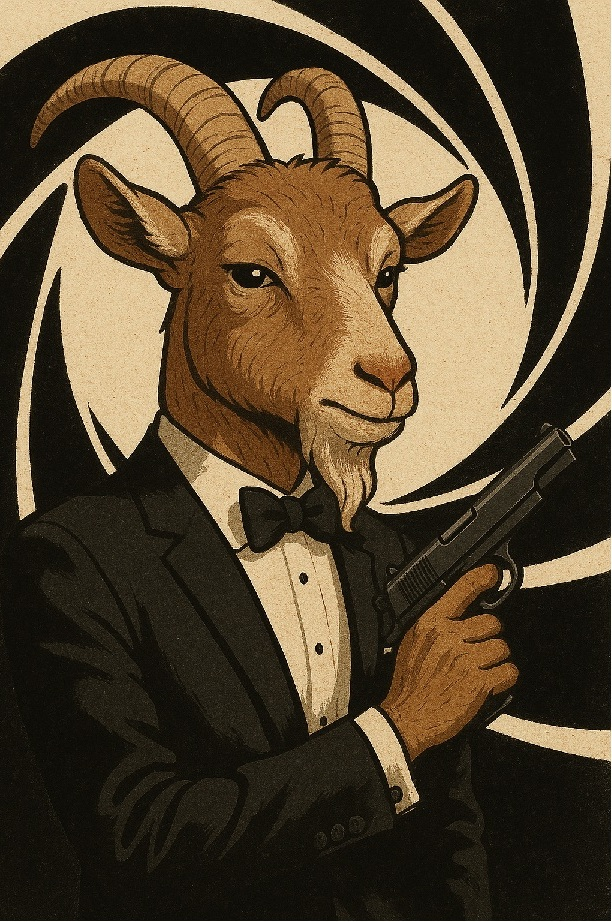
The GOAT
Strong and malty, complex yet clean, and invariably incorporating a goat into the label, the beers we know today as Bock have had an interesting journey. The story begins in the northern German city of Einbeck. In 1368 the city joined the Hanseatic league, and by the end of the 1300s had become a serious brewing center. The beer produced in Einbeck was pale and strong and contained a respectable amount of wheat. It would have been a bit sour and, as a product of wild yeast fermentation, would have boasted a lot of interesting flavours unfamiliar today. Nonetheless, this was a very popular beer throughout the 15th and 16th century and was shipped well beyond the Hansa cities to the Baltics, the Mediterranean and throughout the Holy Roman Empire. As the beer’s popularity grew, so too grew envy. So much so in the brewing heavy city of Munich that in 1540, Duke Ludwig X convinced a brewer from Brunswick the north to come down to Munich and brew some beer, hoping to replicate the Einbeck style. We can presume the inclusion of wheat was immediately halted, in keeping with the Reinheitsgebot. On top of this major grist change, Munich water has high temporary hardness, and by extension higher alkalinity. Einbecks water was clean and soft and so adjustments would need to be made. It would appear that this endeavour was not completely satisfactory, because in 1612, Maximilian I convinced a brewmaster from Einbeck to come to Munich. Once there, he didn’t allow him to leave. By 1614 the Hofbräuhaus was producing its own version of Einbecker and the beer became publicly available in 1638. This coincided with the dissolution of the Hanseatic league, and a massive fire in 1650 devastated the city of Einbeck, including the last remaining brewery. Leaving Munich as the hub of Bock brewing.
The name “Bock” itself has a few origin stories, but the most widely accepted is that of a dialectical adjustment from Einbeck into Ainpock ( which would have sounded more like ainBock in the Bavarian dialect) which then metamorphosed into simply “ Bock”. The German word Bock can take on several meanings, amongst those are buck, ram, and billy goat. More accurately, a billy goat is a ZiegenBock, if we want to get all nerdy about it. This idea seemed to have really stuck though. Producing a Bock these days without a goat on the label is kinda like making an apple pie without a crust, or apples for that matter.
In the Bock family there are a few variations to be aware of. Maibock, or Helles Bock, is the paler of the lot, Dunkles Bock is the darker, “standard” Bock, Doppelbock is a stronger version and can be pale or dark although is usually dark, and Eisbock is mega strong and essentially a distilled product. A close cousin, Weizenbock is a wheat beer brewed to Bock strength.
Dunkles Bock
Considered to be the original modern style, it is a coppery brown beer, richly malty and complex, and rife with maillard flavours. Think about a malty sweetness, some toasted bread crusts, and perhaps a bit of dark fruit flavour. Being a German lager, the fermentation character is always clean. If you notice the hops at all then you have a keen nose, for they serve only to prevent the beer from being undrinkable. The carbonation level is on the lower end and the mouthfeel is that of a medium-full body, with a slight alcohol presence.
Helles/Maibock
Hops are a little more present, although still not highly obvious. The malt character moves towards the lighter end of the spectrum. Think lightly toasted bread, maybe even without crusts, a grainy sweet character and no discernible fruit. It definitely has more bitterness than the darker versions, but is still balanced decidedly to the malt side. Carbonation is higher in the paler Bocks as well. The body is medium and alcohol is often noticeable. In less well executed examples, the alcohol can be a bit harsh and solventy.
Doppelbock
Literally “Double Bock”, although like Double IPAs and Dubbels, it’s not really double anything, just stronger. Doppelbock has its own history. When the Church was going through some challenging times, a group of Italian monks who followed St. Francis of Paula, arrived in Munich. Munich (München), by the way, means “home of the monks”. Among the monk’s various observances were fasting twice a year for around 40 days for Lent and Advent. This meant no solid food, but with little to no restriction on liquids. Beer being a liquid, they brewed a strong beer intended to be nutritionally dense. Apparently they subsisted on only beer for 40 days. Can you imagine? They first named the beer “Sankt-Vater-Bier” (Holy Father Beer), which was also referred to as liquid bread. Later, the name Salvator (saviour) took hold, and once the brewery was secularized, Paulaner Salvator became the official Doppelbock. Most Doppelbocks still use the “ator” suffix in their names.
Both Dark and pale varieties exist, and aren’t just jacked up versions of the original. They will be stronger, richer in malt character, and with a fuller mouthfeel. The malt may contribute some dark dried fruit notes, but these aren’t the same yeast driven esters of a Belgian Dubbel. The maillard products of the longer boil and decoction mashing provide significant flavour upgrade as well. It should also be noted that the paler Doppelbocks share little similarity with Helles Bocks except for a lighter colour. Fermentation remains clean across the board. Carbonation tends to be medium low. Slightly higher in the pale version but still lower than a Helles or Dunkles Bock. Alcohol is noticeable and pleasant, but the lower fermentation temperatures keep the harsher fusel alcohols at bay.
Eisbock
A specialty, originally hailing from Kulmbach, Franconia, Eisbock is made by freezing a Doppelbock and removing the ice, thus concentrating the beer, and of course the alcohol.
Eisbock is the biggest Bock of the flock. The body on this is very full, almost chewy or viscous. All flavours are super concentrated, and expect caramel, chocolate, dark dried fruit and a big sweet malt, reigned in only by the high levels of alcohol.
Weizenbock
In 1907, from the barrels of Schneider Weisse Brewery in Munich emerged a new player, Aventinus. Intentionally marketed as a Weizenbock and the first to bear the name, it was not the first Weizen brewed to higher strength however, as the practice of brewing bigger weizens for Christmas was already in effect. Nonetheless, Aventinus was the first to be called Weizenbock and became and remained the poster child for the style. It is darker than weissbier, even dunkles weisse from longer boils in the decoction mash. The clovelike phenolics are pushed slightly into the background in favour of alcohol, but remain present. In this case, the fruity bouquet is yeast driven, and the higher esters of the Weizen yeast are at play.
How to drink Bocks
These are not the kind of beers one reaches for on a sweltering afternoon. Although some of the Maibocks are often absent in complexity and could potentially seem refreshing, with a little surprise when you try to stand up of course. These are sippers. The traditional glassware seems not to exist, or at least is not agreed upon or widely published, and the beers are served in everything from a snifter to a Weizen glass. A small stemmed glass called a Pokal has been suggested, but again there is a lack of evidence, or at least any that I can find. Responsibility should prevail however and the beers should be served in glassware dictated by strength. A pint of Eisbock might not be ideal. The bigger Bocks would do well to be served at a slightly higher temperature of 10-13°C, with a Maibock you could get away with 6-10°C.
Bocks and food
These are big malty beers and while they can compliment and stand up to many foods, so much so that caution must be exercised as to not blow the dish out of the water. Doppelbock and poached sole probably isn’t what you are going for. Unless you really hate what you are eating and want to completely overwhelm it.
Maibock being the hoppier and less malty rich will do well with dishes that would be too light for the darker Bocks. Tex-Mex will work well, as would most grilled sausages, and burgers. With the slightly noticeable alcohol we can really riff on the fondue angle. Cauliflower and cheddar soup, cheese pizza, grilled cheese, or cheese and onion pie will all work. Most cheeses with enough character can go well with this one also, just try not to move so high up on intensity that the beer can’t keep up. Cheddars, Gruyère, Comté, Jura Montagne, Fontina, and Crottin de Chavignol are some good examples. Desserts like panna cotta or flan will do well with this, as will any mid intensity pome fruit options, apple strudel, apple pie, pear tart, tarte tatin, etc.
Dunkles Bocks and Doppelbocks are at home with grilled richer meats, like game, or properly reared beef, duck, or pork. The malty flavours and deep fruits pair extremely well with dark beans, wild mushrooms, and root vegetables. Bock braised black beans, wild mushroom risotto, roasted sweet potatoes, butternut squash ravioli, roasted beets with goat’s cheese and pumpkin seeds, or roasted acorn squash with brown butter and walnuts are some suggestions. Basically, on the meat side, look for rich flavourful, even gamey selections. On the plant side, look for earthy, and or sweet.
Big cheeses need big beers. Not all blues are created with the same intensity, but Stilton, Benedictine Bleu, and Roquefort will all do well. Gorgonzola Dolce might be a little too understated. Triple cream bloomy rind cheese will marry nicely, as will some of the nuttier, meatier, aged Goudas. If you dare, you may try to tame Dragons Breath Blue from Nova Scotia with a Doppelbock. The sweetness of the beers will match many deserts, and the chocolate and fruit notes will pair incredibly with rich fruity or chocolate desserts. Chocolate lava cake, pumpkin pie, fig tarts, and anything with dark cherries are fair game.
Eisbocks are a lot. You probably would be wise to steer away from serving this with a main. Partly because it’s not going to be scrubbing away much of anything, partly because it’s sometimes hard to reconcile beer being 14% ABV as a dinner accompaniment, and partly just because it’s too big. Imagine sitting down to dinner with a full 150ml pour of vintage Port as your main beverage. Eisbock will just bury almost any dish. All manner of cheeses and desserts, however, are welcomed with open arms. Generally, the same desserts that work with a Doppelbock will work with en Eisbock, but now you can really remove the cap on the cheeses, being mindful that you should raise the floor too. Almost all cheese will probably all work out ok, but a sledgehammer on a finishing nail is overkill. Burrata, for example, will just be washed out to sea.
Weizenbock can be thought of as the bigger Dunkles Weiss. Seafood, cured meats and many curries will pair well. Roasted Chicken, grilled sausages, or loaded baked potatoes will work.
Low to mid intensity cheeses will pair beautifully as well. Buratta, Mozzarella di Bufala, Red Leceister, Double Gloucester, Délice de Bourgogne, Manchego, or Morbier to name a few. Dessert? Banana Bread. The one with chocolate in it.
I hope you have enjoyed this brief introduction to the world of Bocks. Until next time.
Prost!