
Some Good AdWeiss: A Guide to Weissbiers
Every beer has a time and a place. For Weissbier, that time and place is any time, any place.
It’s refreshing in the summer, delicious in the winter, and fits seamlessly in between. It has the uncanny ability to pair with almost any dish, making it the fallback for many a stumped beer steward. With wheat sharpness, scrubbing carbonation, that beautiful hazy sheen, and the signature clove and banana aromas, Weissbier is a beautiful thing. And don’t forget that big pillowy head of foam! But are they all the same? Of course not. In this brief article, we’ll explore five Weissbiers that are easy enough to find in Ontario. There are more out there to be sure, but often require travel, and a conversation with the store manager. So we’re sticking with the most widely available.
Weiss means white, Weizen means wheat, Hefe means yeast. Weissbier, Weißbier, Weizenbier, Hefeweizen, are all the same thing. Krystal Weiss have been filtered, and are hard to come by. Dunkelweiss are darker weissbiers and will be discussed in the very near future.
Paulaner Weissbier
The most clove forward example of the group, with a bit of the banana coming through in the aftertaste. There is some refreshing wheat sharpness, along with a fuller mouthfeel. Not a particularly “yeasty” weissbier, and with a bit more DMS than the others.
Weihenstephaner Hefeweisbier
This is the banana king of the bunch. The clove is there but supports the banana and bready doughy malt. It’s like banana bread. The wheat is loud and proud. I find this the more bitter of the group, but no complaints here. In fact, this is my top choice.
Hacker-Pschorr Weissbier
Pretty balanced in the nose with clove taking the lead, but with enough banana to be obvious. A bready malt forms the flavour base without too much yeast character. I feel this has the lowest overall character of the group.
Erdinger Weissbier
A much more complex example. The bread dough yeastiness hits first and then the clove creeps up. The banana is very subtle on the nose. On the palate, the initial bready malt hits first and then some floral hops start to appear, after which comes the banana. The light wheat sharpness is nothing short of refreshing. There is more carbonic bite here, really amping up the refreshing quality.
Benediktiner Weissbier
A good balance of banana and clove in the bouquet, but dominated by a kind of sharp yeastiness. This one is definitely more tart than any of the others, and offers a bit more of a secondary fermentation character.
How to Drink Weissbier.
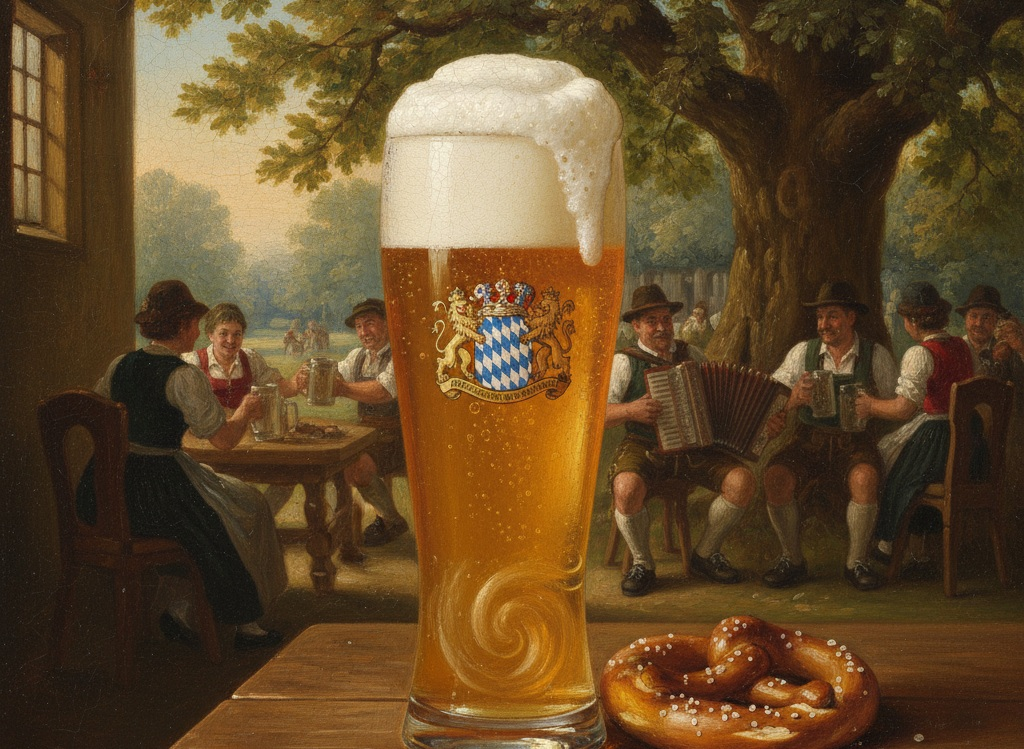
The weissbier pour is an event enshrouded in drama. The beer is hard poured from the bottle into a large vase shaped glass, then the bottle is laid on its side and rolled back and forth to rouse the settled yeast, which is then introduced to the glass. You can just swirl the last bit around should you desire the yeast in the beer, if you don’t want to roll it around. A proper pour will produce a massive moussy head that should last forever. Ideal serving temperature range is 4-9॰ C, and where in the range depends on the intended experience. As a refresher on a hot summer’s day, stick to the low end. If you really want to spend time picking apart the aromatics, move closer to the higher end. One last note: I often mention that how you drink your beer is none of my business, and it’s not, but please use a glass, and please don’t put a slice of lemon in it!
Prost!