
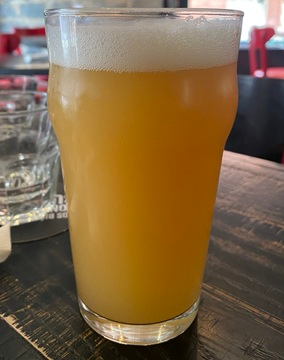
In Praise of Haze
It may seem like a misguided topic for an article. After all, everyone is brewing them and everyone is doing them. Or drinking them at least. The haze craze doesn’t seem to be going anywhere soon, so what am I on about? Well, it goes by many a name, New England IPA ( NEIPA), Hazy, East Coast, or Juicy IPAs, and it is a style that is unfairly and frequently maligned.
I’m looking at you Dr. Bamforth.
Before I go any further. And before I start x-raying my mailbox, please read the following statement. There are many excellent beer writers out there, and many experts whose contributions to the world of craft beer are paramount. Any names mentioned in this article belong to those for whom I have the utmost respect.
In the world of beer, craft or otherwise, Dr. Charlie Bamforth is the GOAT. But, he calls NEIPA chicken soup. Rachael Hudson, of Pilot Brewing, calls it orange juice. I get it. Some of them look like diluted Dijon. Although, weissbier isn’t exactly clear, and nor are kellerbiers. Yet they have managed to escape harassment. Bamforth and Hudson are not alone either. For whatever reason, NEIPA is the beer that beer people love to hate. Maybe the hop burn and astringency of early days are etched in painful memories. Maybe it’s the popularity amongst the masses that makes it unpopular amongst the specialists. Maybe they actually don’t like it. I can’t imagine it’s a subconscious shun to accessibility. After all, no one is going after pale lager.
But if you are a student of beer, a taster of beer, an aficionado of beer, and especially if you’ve taken a keen interest in hops, these beers are a necessity. Nowhere else can the complexity and diversity of hops aromas shine. Sure west coast IPAs are full of hops, sure Italian pilsners and dry hopped sours can come to play, but the NEIPA is just a hop aroma showcase. Full stop. The yeast is clean, the malt is subtle and supportive, and the restrained bitterness provides for a solid and balanced beverage. All these participants know their place. Providing the supporting drone of the bagpipe, the gentle simple chords offering footing for the singer’s voice, or the attentive class, to whom the professor professes. The hops are the star, and the only star, and everyone knows it.
Like anything, there are good examples and bad examples. Hop burn is real, but does seem as if, for the most part, it has been reigned in. The haze should be a sheen, not a thick glass of particulate. Orange juice is fine, a gritty milkshake is not. Beware the flavour additions. If you like fruit in your beer, that’s your business. If you want to experience the glory of hops in full, stick with unadulterated selections. Let your fruits come from terpenes and thiols and let the hops speak for themselves. Experts be damned, myself included.