
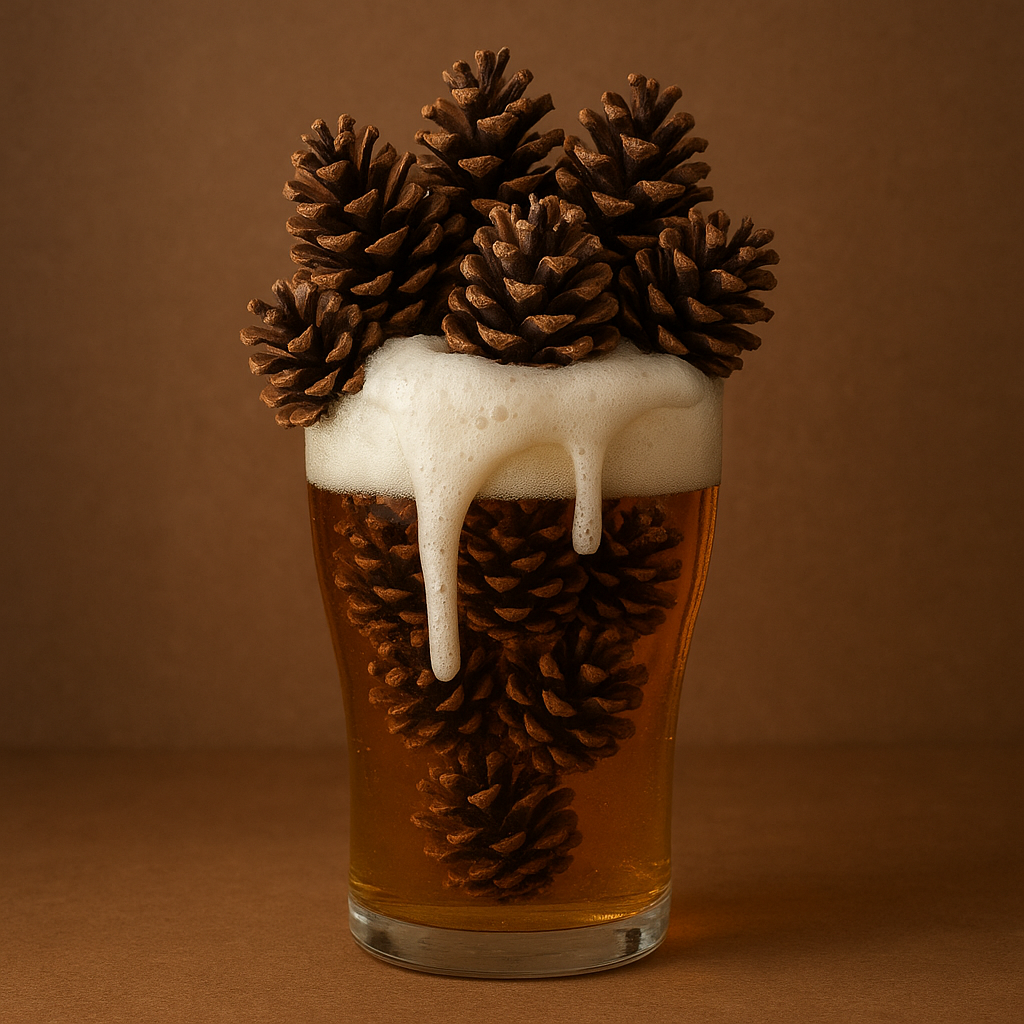
The Aroma Files #002: Pine
“A classic West coast IPA with prominent notes of pine and resin”. Visually, it’s easy to reconcile right? Hop cone, pine cone. Conveniently, the chemistry isn’t overly vexing either. The pine aromas mainly come from a few terpenes and terpenoids which are present across hops, conifers and rosemary.
The primary source of the signature pine aroma is, fittingly, pinene. Both α-pinene, and β-pinene are contributors to the aroma, with β-pinene being the less intense of the two. α-pinene is sharper but can oxidate to borneol, a terpenoid, which contributes a much softer pine character. Myrcene and humulene, which are of course two of the major volatiles in hops, don’t have a pine aroma but together they can enhance the overall pine picture by adding earthy, woody notes. Terpinolene and Δ-3-carene, two other monoterpenes, can contribute to the experience. Terpinolene has a kind of sweet pine aroma, like the “Christmas tree scent”, and can readily oxygenate to terpineol, a terpenoid with a sweeter and more floral aroma. Δ-3-Carene expresses a dry coniferous odour. Both are usually found in very small amounts.
Limonene, the famous citrus aroma we see again and again, can oxidate into carvone, which has a more minty pine aroma, while 1,8-cineole, aka eucalyptol, lends a cool medicinal pine quality. The monoterpene alcohol geraniol has a sort of sweet floral pine aroma to it, as does the ester geranyl acetate.
As relatively uncomplex as the pine aroma is, we can see there are multiple contributors coming in from multiple angles. The compounds with the strongest overlap between hops and pine are Pinene, myrcene, Δ-3-Carene, and terpinolene.
To further hone your aroma identification skills, Master Cicerone® Jen Blair’ ‘s Aroma: Explore The Wheel offers 100 common beer aromas! https://underthejenfluence.beer/
That’s one down, 200 to go!