
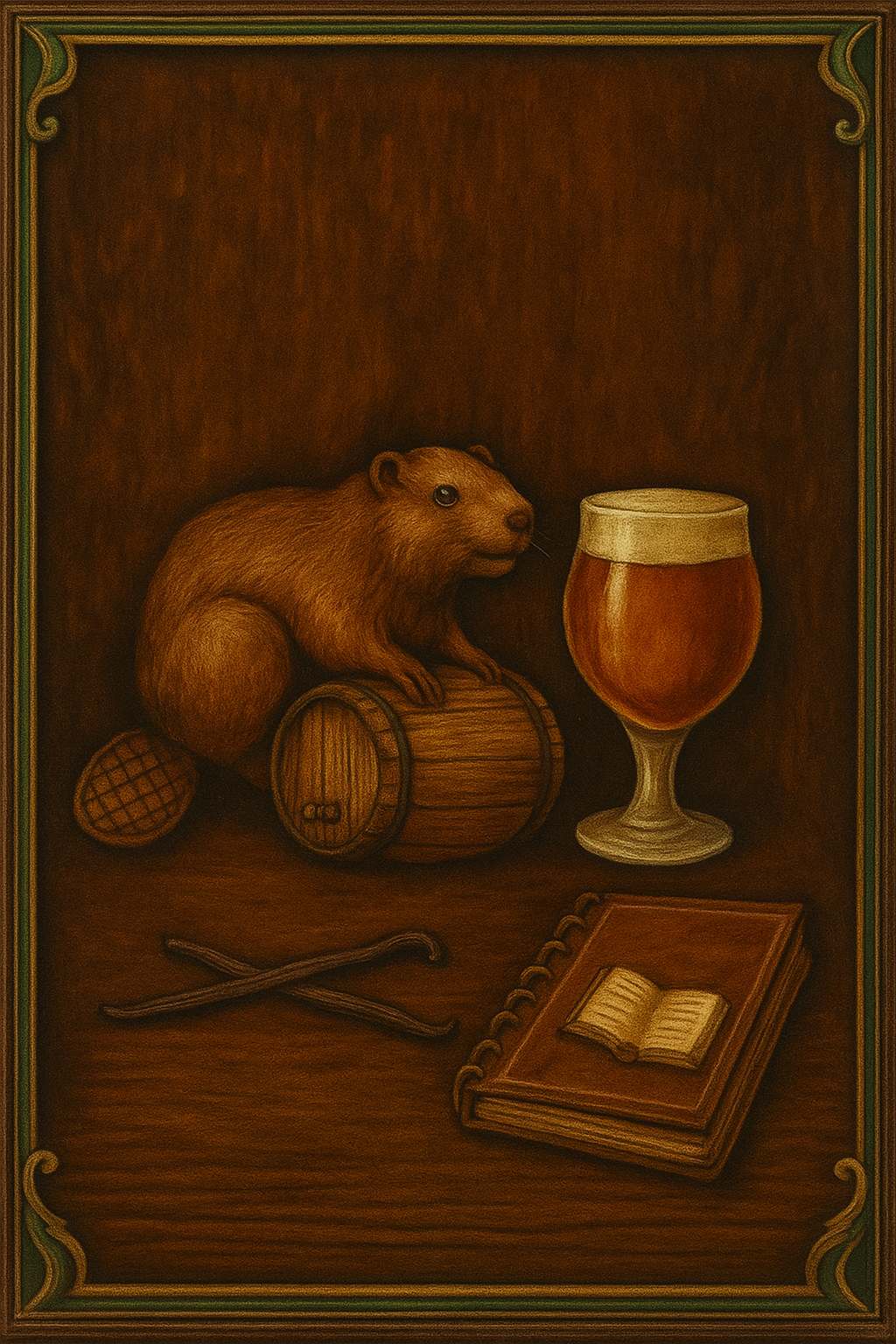
The Bark, The Beaver, The Barrel, and The Beer: The Story of Vanilla In Your Beer
If vanilla isn’t the most popular flavour on the planet, then it’s pretty damn close. It’s everywhere too. It’s in ice cream of course, deserts, perfume, air fresheners, oh and BEER. Like most flavourings, vanilla can simply be added in at whatever point seems appropriate, but what makes vanilla in beer so interesting is that it is generally not added in, but rather makes its appearance via a series of chemical reactions in the brewing process. And that is what we are here to explore.
Let’s briefly introduce real vanilla. The vanilla orchid (Vanilla planifolia), a type of vine, produces seed pods, and these pods, also called the vanilla bean, are harvested, dried and fermented. The orchids grow in many regions, but Madagascar is the largest producer by far. The word Vanilla is a derivative of the Spanish word Vainilla, which means little pod. Vainilla in turn is the diminutive of Vaina, from the Latin word “ vagina”, meaning sheath. Vanilla pods are pretty expensive and don’t yield a hell of a lot. They often come in a glass vial to emphasize how special they are, and presumably to keep them fresh. Artificial vanilla flavour is by far a more economically sound alternative for standard home use.
There are around 170 identified aromatic compounds in natural vanilla, but the dominant contributor to that signature flavour and aroma is a phenolic aldehyde called Vanillin. This is the compound found in artificial vanilla, and the focus of this article.
Vanillin can be obtained from several sources outside the vanilla bean. These include guaiacol, wood lignin, and beaver’s anus. Yup. Now, as much as that might be a world class conversation starter, it’s actually the castor sacs, adjacent to the anal glands, and not the actual anus. This doesn’t make it any less weird, and how this was discovered is fodder for many a wild thought. It’s most likely though that perfumers were already experimenting with numerous animal scents, and not that a ragtag group of vanilla hunters went skulking around in the hinterland sniffing the backsides of unsuspecting wildlife. The extracted compound is called castoreum and is still listed by the FDA as mostly safe. Fortunately, for humans and beavers alike, its use is now very miniscule. If however, your interest is now so piqued that insatiable curiosity has taken hold of your daily life, you are in luck. There remains a variety of Schnapps in Sweden called Bäverhojt, (beaver shout), which continue to be flavoured with castoreum. It’s a hell of a way to obtain some vanilla, so it should be no surprise that the lignin and guaiacol routes tend to be preferred. Lignin is a polymer in plant cell walls that provides rigidity and makes them “woody”. Guaiacol is a phenolic compound produced by certain plants, usually a type of flowering plant called Guaiacum. Guaiacol can also be derived from wood creosote.
So that’s where the stuff in your box cake comes from, now let’s talk about beer. The most obvious and uncomplicated way to impart a vanilla flavour into beer would be just to add it. This does happen but its integration with other flavours is often less than satisfactory, and the result lacks any real subtlety. This has been my experience anyway. The three naturally occurring roads to vanillin are fermentation driven, malt driven, and barrel aging. I say natural because the brewer isn’t simply throwing a bottle of extract into the tank. Control over the flavour remains in the hands of the brewer, regardless of the source. Barrel aging is by far the most significant contributor, with fermentation being a minor player at best, if they even show up to the party at all. Let’s start there.
Fermentation
Malted barley contains a fair amount of ferulic acid, but it is bound and has been esterified into arabinoxylans, a form of hemicellulose, inside the cell walls of the husk. In other words, to make any meaningful use of it, it needs to be unlocked. During mashing, especially if a ferulic acid rest at ~44॰C is employed, enzymes called ferulic acid esterase will release the free ferulic acid from the husk and into the wort. Once the precursor (ferulic acid) is present, one of two pathways are possible.
The first is that yeast with an intact PAD1 gene (referred to as POF + or PAD+ yeast) constructs the phenylacrylic acid decarboxylase enzyme which pulls a carboxyl group from the ferulic acid. This transformation generates the end product 4-vinyl-guaiacol (4VG), which is the signature clove aroma in Weissbier. Rarely, 4VG can oxidize further into vanillin. Most yeast do not have this gene “turned on” and so this route becomes both process and yeast specific.
A second way that fermentation can contribute to vanilla flavours is the CoA dependent route. CoA is Coenzyme A and is a critical factor in many metabolic pathways. The enzyme furloyl-CoA synthase converts free ferulic acid into feruloyl-CoA. Two more enzymes, ferunoyl-CoA hydratase and adolase, further cleave the side chains to convert feruloyl-CoA into vanillin and acetyl CoA. The vanillin at this point can remain stable, or further oxidize into vanillic acid if the vanillin dehydrogenase enzyme is present. Most saccharomyces (brewers yeast) do not code for the feruloyl-CoA synthase, and so the potential to generate vanillin via this pathway is left in the hands of various other microbes. Amycolaptosis, streptomyces, and pseudomonas are very efficient at this, but are otherwise undesirable and unsuitable in beer. Brettanomyces bruxellensis, and some strains of lactobacillus, can effectively execute this conversion, but the resulting levels of production are still quite low.
Finally, via the oxidization of hydroxycinnamic acids, acetobacter and gluconobacter can also contribute small amounts of vanillin.
This is clearly a fairly inefficient way to impart vanilla into beer.
The Malt
Lignin is a type of polymer, a group of crosslinked lignols, which are small aromatic molecules and which are, importantly, phenolic precursors. The three main lignols are p-coumaryl alcohol, sinapyl alcohol, and coniferyl alcohol. The three major lignin types are guaiacyl lignin, made mostly from coniferyl alcohol, syringyl lignin, made most from sinapyl alcohol, and p-hydroxyphenyl lignin, made mainly of p-coumaryl alcohol.
The barley husk contains lignin, dominated by the guiacyl type. The kilning and/or roasting process triggers the thermal degradation of the lignin to vanillin. This is the same pathway as in barrel toasting, which we will explore next, but with a much lower yield. The advanced stages of maillard production can in turn construct certain aldehydes which contribute to the vanilla impression but are not vanillin. Note that lighter malts are more apt to preserve ferulic acid and therefore favour the production of the clovelike 4VG over vanillin. Darker malts will have destroyed more ferulic acid and experienced more lignin degradation, creating a more favourable vanillin to 4VG balance.
Again, this may contribute to the flavour in small amounts, but is still small potatoes.
Barrels
Here come the big guns. Wood, and specifically oak, contains a lot of lignin. Fortuitously, it’s mainly of the syringyl and guaiacyl type. The coniferyl alcohol in the guiacyl type is the key to vanillin production, while the synapyl alcohol contributes to the vanilla impression as well, but in a different way. The pathway here is oxidation/dehydrogenation via thermal degradation, into coniferaldehyde, which then further oxidates into vanillin. The way this works is as follows. Coniferyl alcohol is a monolignol containing a phenolic ring, one methoxy group ( -OCH3), a hydroxy group (-OH), and a propenyl side chain (-CH=CH-CH2OH). The side chain is the important part. The allylic alcohol group of the side chain (-CH2OH) oxidates into the aldehyde group (-CHO) whereby the carbon atom gains an oxygen and loses a hydrogen. Hydrogen atoms are then removed from the propenyl group by dehydrogenation, shortening the chain, so now just the formyl group is left attached to the phenolic ring.

A bit complicated, yes. If biochemistry isn’t your jam then the simpler version is thus. Lignin contains locked up aromatic units. The heat from charring or toasting breaks pieces of the molecule off, leaving the aromatic part free, vanillin. The ethanol is then able to extract and dissolve the vanillin into the beer, imparting the flavour and aroma into the finished product.
What you also want to know is that the alcohol degrades into an aldehyde. Aldehydes have lower molecular weight and are less stable than alcohols. This reduction in the sidechain, and as a result, increase in volatility is what allows the sweet aroma to flow freely.
The wood and the level of toasting matter too. The charring or toasting is what breaks free the guaiacyl units, so not enough means not enough thermal degradation into vanillin, but too much basically incinerates them. This leaves a medium level of char as the sweet spot for vanilla flavour. Oak is the most commonly used barrel for wine and spirits and imparts the most vanillin. American oak contains more lignin and will release a stronger flavour than European oak. Wider grained wood, from trees that grew faster will release more vanillin but can be a bit harsher than tighter grained, slower grown trees. Finally, new barrels have much more vanilla potential than used barrels which will already be depleted of a lot of lignin.
Some Takeaway Notes
The sensory threshold for vanillin is around 0.3-0.5 mg/L. Barrel aging can boost those levels up to 4mg/L. Suspended proteins and polysaccharides in the beer however can bind to vanillin, reducing the sensory perception. In paler beers vanillin at low levels can be overshadowed by any other phenolics and become lost. All this should illustrate the tug of war between subtlety and a vanilla bomb in your glass.
Hopefully this helps to reshape how you think about the subtle aromas of vanilla next time you sit down to a pint.
Cheers